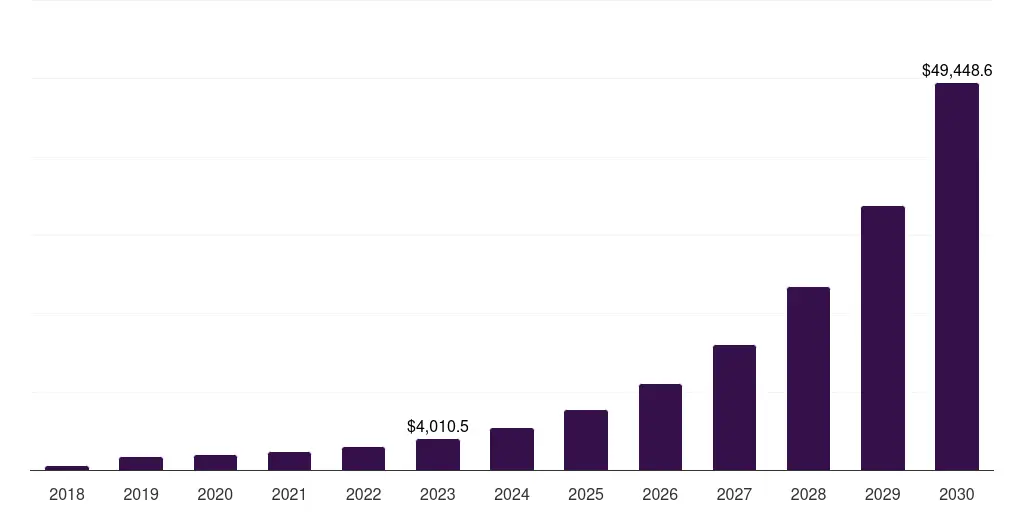
In 2023, global carbon markets were valued at over $900 billion, driven by systems that quantified, tracked, and rewarded emission reductions. Meanwhile, over 2 billion people still lack access to safely managed sanitation — and yet, we have no equivalent structure that assigns value to solving this.
Carbon became measurable because we made it matter, not just morally, but economically. Water and sanitation, on the other hand, remain largely invisible in value systems. They are essential to life, health, and development, but are treated as passive cost centres rather than strategic assets.
But what if we flipped that?
This article explores how a value-based approach — inspired by carbon markets — can transform how we design, fund, and govern water and sanitation systems. By examining incentive structures, outcome-based financing, and real-world models like Australia’s Murray–Darling Basin, we ask: Can water be valued not just as a resource, but as a result?
What Carbon Got Right (That Water Didn’t… Yet)
Carbon markets did not come about just because people became more aware of environmental issues. While reducing emissions was a clear goal, what truly pushed us was the scale of the problem. It became too big to ignore, and we needed a structured system to respond — one that could align intent with implementation.
The Kyoto Protocol in 2005 introduced carbon credits as a way to reduce emissions without forcing everyone to cut equally. It was a compromise, yes — but a strategic one. It created structure: rules, metrics, budgets, and penalties. A price tag.
Suddenly, carbon was not just a science problem. It was visible, trackable, and tradeable. A functional market opportunity.
And here is the thing: Carbon got all this because we decided it mattered enough to design around it.
Now imagine if water had even half that kind of structure.
Why Water Still Lacks a Value Framework
It is not because water is not urgent – it is. But we still approach it through the lens of service delivery and subsidy, not through systems thinking or value frameworks.
Water is deeply local, politically sensitive, and layered with cultural meaning. That makes it harder to standardize, harder to price, and often, easier to ignore.
Unlike carbon, there’s no global mechanism to track water outcomes. No emissions-style accountability. No market for verified “safe sanitation” credits. Even where access improves, the incentives to sustain, innovate, or monitor long-term impact are weak — or missing altogether.
The result? Water and sanitation remain vital, yet structurally undervalued. Not because we don’t know their worth, but because we haven’t built systems that reflect it. And perhaps more importantly, we’ve failed to frame water as a resource that deserves deep respect, not just regulation. Pricing is one dimension. But valuing water begins with recognizing it as the life force it is — essential, shared, and far more than a commodity.
What Would It Take to Value Water?
If water and sanitation are foundational, the absence of a value framework represents more than a policy gap — it is a barrier to sustainability. In most WASH programs today, the emphasis is on physical infrastructure and service coverage. But without systems that recognize and reward sustained outcomes, the long-term impact often falls short.
To embed value into WASH systems, we must look beyond pipes and pumps and toward incentives.
Incentives are typically framed as tools for adoption or behaviour change. However, in the context of sustainable sanitation, their role is far deeper. They act as structural drivers that shape decisions, unlock participation, and sustain performance across institutions, technologies, and communities.
When thoughtfully designed, incentives can:
- Encourage public participation in planning, monitoring, and accountability.
- Enhance economic efficiency through cost recovery and targeted resource use.
- Promote innovation by supporting new treatment, reuse, or decentralized models.
- Drive behavioural change in hygiene, operation, and safe disposal practices.
But incentives cannot function in isolation. They require structure — defined outcomes, feedback loops, and institutional anchoring. Without these, incentives risk becoming one-time nudges rather than long-term enablers.
So, what would a structured, value-based incentive system for WASH actually look like?
- Performance-based subsidies – Linking O&M grants or infrastructure reimbursements to verified service quality, not just construction completion.
- Outcome-linked financing – Encouraging blended finance tied to real metrics: reduction in open defecation, treated sludge volumes, greywater reuse rates.
- Tariff flexibility with equity protection – Allowing cities to gradually shift toward user-based pricing while protecting vulnerable populations through targeted subsidies.
- Digital monitoring integration – Using low-cost tech (e.g., flow sensors, FSM GPS tagging) to generate real-time WASH performance data that drives decisions.
- Incentivizing behaviour via community metrics – Rewarding community-level milestones (e.g., ODF sustainability, school toilet use, menstrual hygiene adoption) with tangible gains such as additional amenities, recognition, or maintenance funds.
- Water trading mechanisms in stressed basins – Enabling controlled allocation and trading of water between agricultural, municipal, and ecological users can drive efficiency and promote long-term conservation, when backed by strong regulation and transparent accounting.
This last point opens up a wider possibility — one that goes beyond sanitation and looks at water itself as a managed, accountable resource.
And it’s not just theoretical.
A Case in Point — The Murray–Darling Basin
The idea of valuing water through structured systems is not abstract. It already exists, and one of the most cited examples is Australia’s Murray–Darling Basin (MDB).

Spanning over one million square kilometers, the MDB is Australia’s most critical river system — supporting agriculture, ecosystems, and communities across the southeastern region. Faced with recurring droughts, competing demands, and ecological degradation, the government responded not only with conservation strategies but with a bold step: creating a regulated water trading market.
Under this system, water rights were separated from land ownership, allowing individuals and entities — from farmers to municipalities — to buy, sell, or lease water allocations. The aim was to make water use more flexible, transparent, and efficient, while ensuring environmental flows were protected through public water buybacks.
The broader value framework of the Murray–Darling Basin Plan was anchored on four key instruments:
- Water Trading Scheme – A structured market allowed voluntary trading of entitlements, improving adaptability across users and regions.
- Subsidies for Water Efficiency – The government incentivized irrigation upgrades to reduce losses and promote conservation.
- Environmental Water Purchase – Public funds were used to reclaim water for ecological restoration, particularly in degraded wetlands.
- Tiered Water Pricing – Higher usage levels triggered higher costs, promoting demand-side efficiency and fairer distribution.
While not without its criticisms, the MDB demonstrates that valuing water can be institutionalized through governance, regulation, and incentive alignment.
Here, water did not just become an economic good. It became a shared responsibility — one tied to performance, sustainability, and long-term resilience.
Toward a Value-Driven Water Future
Carbon markets did not emerge fully formed — they were built: structured, debated, tested, and eventually woven into policy and finance. Water and sanitation deserve the same ambition.
India has the foundations already laid by programs like Swachh Bharat, Jal Jeevan, and AMRUT. But to future-proof WASH, we need to go beyond access and move toward systems that reward outcomes, foster innovation, and institutionalize accountability.
Valuing water is not about putting a price tag on a public good. It is about creating structures that say: this matters — and here is how we protect it.
We have seen what is possible when that value is built into the design. Now the question is — are we ready to build it for water?
Author: Lakshmi Priya